109
Mt
Meitnerium
Atomic Mass 278
Electron Configuration [Rn]7s25f146d7(calculated)
Oxidation States 9, 8, 6, 4, 3, 1 ​(predicted)
Year Discovered 1982

Identifiers

Element Name Meitnerium
Element Symbol Mt
InChI InChI=1S/Mt
InChIKey VAJSJTKWMRUWBF-UHFFFAOYSA-N

Properties

Atomic Weight

278

278

Relative Mass: 276.15159(59#)

Electron Configuration

[Rn]7s25f146d7(calculated)

Atomic Radius

Empirical Atomic Radius : empirical: 128 pm (predicted)

Oxidation States

9, 8, 6, 4, 3, 1 ​(predicted)

Atomic Spectra

Levels holdings

Physical Description

Solid

Element Classification

Metal

Element Period Number

7

Element Group Number

9

Estimated Crustal Abundance

Not Applicable

Estimated Oceanic Abundance

Not Applicable

History

Meitnerium was first produced by Peter Armbruster, Gottfried Münzenber and their team working at the Gesellschaft für Schwerionenforschung in Darmstadt, Germany in 1982. They bombarded atoms of bismuth-209 with ions of iron-58 with a device known as a linear accelerator. This produced atoms of meitnerium-266, an isotope with a half-life of about 3.8 milliseconds (0.0038 seconds), and a free neutron. Meitnerium's most stable isotope, meitnerium-278, has a half-life of about 8 seconds. It decays into bohrium-274 through alpha decay.

On August 29, 1982, physicists at the Heavy Ion Research Laboratory, Darmstadt, West Germany made and identified element 109 by bombing a target of 209Bi with accelerated nuclei of 58Fe. If the combined energy of two nuclei is sufficiently high, the repulsive forces between the nuclei can be overcome.

In this experiment, a week of target bombardment was required to produce a single fused nucleus. The team confirmed the existence of element 109 by four independent measurements. The newly formed atom recoiled from the target at predicted velocity and was separated from smaller, faster nuclei by a newly developed velocity filter. The time of flight to the detector and the striking energy were measured and found to match predicted values.

The nucleus of 266X started to decay 5 ms after striking the detector. A high-energy alpha particle was emitted, producing 262/107X. This in turn emitted an alpha particle, becoming 258/105Db, which in turn captured an electron and became 258/104Rf. This in turn decayed into other nuclides. This experiment demonstrated the feasibility of using fusion techniques as a method of making new, heavy nuclei.

Description

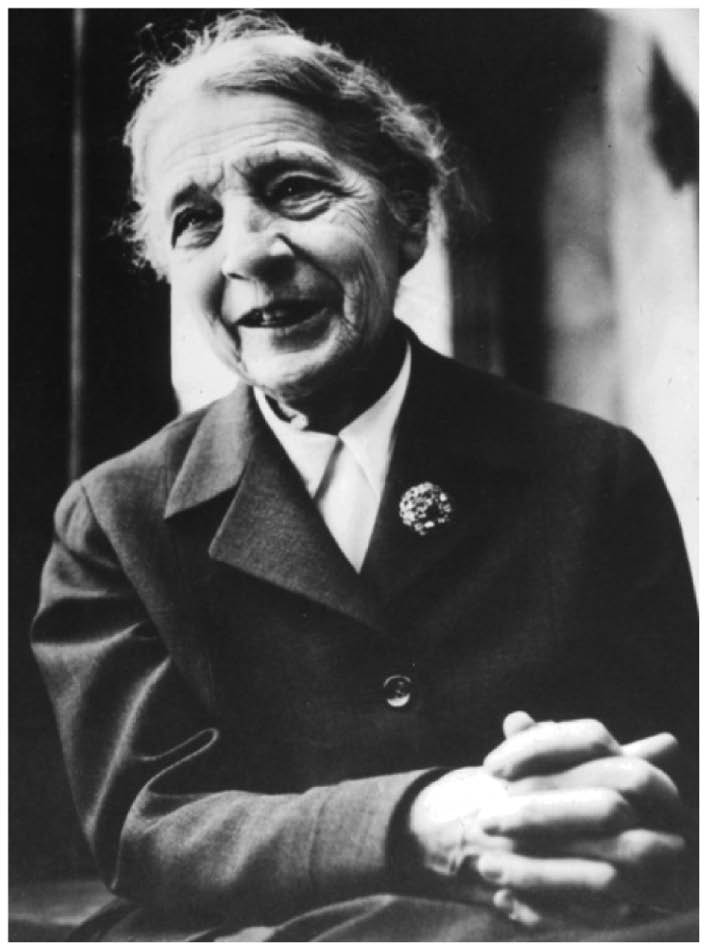
Meitnerium does not occur naturally in the Earth’s crust. Meitnerium was first synthesized by German scientists at the GSI Center for Heavy Ion Research in Darmstadt, Germany in 1984 using the nuclear reaction 209Bi (58Fe, n) 266MtHs. The element is named for the physicist, Lise Meitner (Fig. IUPAC.109.1), who discovered the element protactinium [653], [655]. Meitnerium is used only for scientific research.

Fig. IUPAC.109.1: Lise Meitner is the nuclear physicist, after whom meitnerium is named (used with permission of the American Institute of Physics’ Emilio Segre Visual Archives).

[653] W. Loveland. “Nuclear Chemistry”, in Encyclopedia of Physical Science and Technology, R. A. Meyers (Ed.), Academic Press, New York (2001).
[655] Science Education at Jefferson Lab. It’s Elemental – The Element Meitnerium, Science Education at Jefferson Lab (2014), Feb. 25; http://education.jlab.org/itselemental/ele109.html.

Meitnerium is named after Lise Meitner.

Users

Since only small amounts of meitnerium have ever been produced, it currently has no uses outside of basic scientific research.

Compounds

See more information at the Meitnerium compound page.

Element Forms

CID Name Formula SMILES Molecular Weight
56951716 meitnerium Mt [Mt] 277.154

Isotopes

Stable Isotope Count 0

Atomic Mass, Half Life, and Decay

Nuclide Atomic Mass and Uncertainty [u] Half Life and Uncertainty Discovery Year Decay Modes, Intensities and Uncertainties [%]
265Mt 265.135937 ± 0.000471 [Estimated] 2 ms [Estimated] α ?
266Mt 266.137062253 ± 0.000103568 2.0 ms ± 0.5 1982 α≈100%; SF ?
266Mtm 266.137062253 ± 0.000103568 6 ms ± 3 1984 α=100%
267Mt 267.137189 ± 0.00054 [Estimated] 10 ms [Estimated] α ?
268Mt 268.138649 ± 0.00025 [Estimated] 23 ms ± 7 1995 α=100%
269Mt 269.138809 ± 0.000335 [Estimated] 100 ms [Estimated] α ?
270Mt 270.140322 ± 0.000205 [Estimated] 800 ms ± 400 2004 α≈100%
271Mt 271.140741 ± 0.000354 [Estimated] 400 ms [Estimated] α ?
272Mt 272.143298 ± 0.000521 [Estimated] 400 ms [Estimated] α ?; SF ?
273Mt 273.144695 ± 0.000455 [Estimated] 800 ms [Estimated] α ?; SF ?
274Mt 274.147343 ± 0.000404 [Estimated] 850 ms ± 540 2007 α=100%
275Mt 275.148972 ± 0.000416 [Estimated] 31 ms ± 17 2004 α=100%
276Mt 276.151705 ± 0.000571 [Estimated] 700 ms ± 80 2004 α=100%
276Mtm 276.151705 ± 0.000571 [Estimated] 7 s ± 3 2012 α=100%
277Mt 277.153525 ± 0.000711 [Estimated] 9 s ± 6 2013 SF=100%; α ?
278Mt 278.156487 ± 0.000621 [Estimated] 6 s ± 3 2010 α=100%
279Mt 279.158439 ± 0.00072 [Estimated] 20 s [Estimated] α ?; SF ?
280Mt 280.161579 ± 0.000644 [Estimated] 10 s [Estimated] α ?; SF ?
281Mt 281.163608 ± 0.000644 [Estimated] 1 s [Estimated] α ?; SF ?
282Mt 282.166888 ± 0.00048 [Estimated] 100 ms [Estimated] 2016 α≈100%; SF ?

Information Sources

  1. 1.  PubChem
  2. 2.  Atomic Mass Data Center (AMDC), International Atomic Energy Agency (IAEA)
  3. 3.  IUPAC Commission on Isotopic Abundances and Atomic Weights (CIAAW)
  4. 4.  IUPAC Periodic Table of the Elements and Isotopes (IPTEI)
    LICENSE
    Copyright (c) 2020 International Union of Pure and Applied Chemistry. The International Union of Pure and Applied Chemistry (IUPAC) contribution within Pubchem is provided under a CC-BY-NC-ND 4.0 license, unless otherwise stated.
    https://creativecommons.org/licenses/by-nc-nd/4.0/
  5. 5.  Los Alamos National Laboratory, U.S. Department of Energy
  6. 6.  Jefferson Lab, U.S. Department of Energy
    LICENSE
    Please see citation and linking information https https://www.jlab.org/privacy-and-security-notice
  7. 7.  NIST Physical Measurement Laboratory
  8. 8.  PubChem Elements
    Meitnerium

Shall we send you a message when we have discounts available?

Remind me later

Thank you! Please check your email inbox to confirm.

Oops! Notifications are disabled.