
Pyridine Research Selection Roadmap: Structural Features, Reaction Logic, and a Classification Navigator for Reagents/Building Blocks/Reference Standards (Tables 1–6)
Pyridine Research Selection Roadmap: Structural Features, Reaction Logic, and a Classification Navigator for Reagents/Building Blocks/Reference Standards (Tables 1–6)
1.Why does pyridine show up so often in research and industry?
If you’ve ever searched the literature in medicinal chemistry, agrochemical R&D, materials and catalysis, or analytical testing, you’ll quickly notice one fact: the “pyridine ring” appears with striking frequency. The reason is not mysterious—pyridine is both an important basic chemical (it can be used directly as a solvent/base) and a “universal structural fragment” embedded in countless downstream molecules (drugs, pesticides, ligands, etc.). Industrially, pyridine was historically isolated from coal tar; later, large-scale production more commonly relied on gas-phase condensation routes using acetaldehyde/formaldehyde with ammonia.
Pyridine also intersects with life sciences: vitamin B3 (niacin/niacinamide) is converted in vivo into NAD/NADP, which participate in the redox metabolism of virtually every cell. This is the fundamental reason why pyridine “looks like a small ring, yet runs through so many fields.”
2.What is pyridine?
Pyridine is a six-membered aromatic heterocycle: it resembles benzene, except that one “CH” in the ring is replaced by a nitrogen atom (so it is also often called azabenzene). Its molecular formula is C₅H₅N.
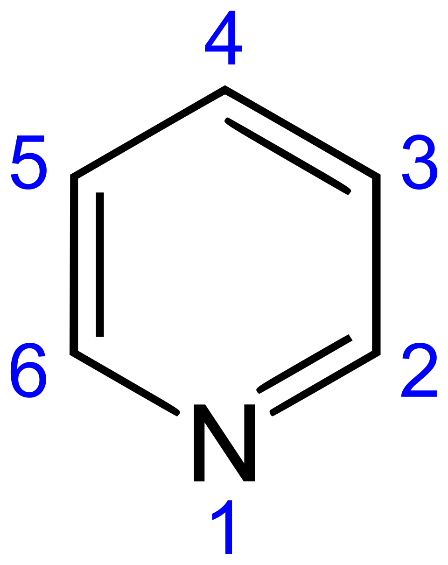
Pyridine at a glance (Key ID Card)
Item | Key information | What this means for understanding/selection |
Structure | Six-membered aromatic ring + one ring nitrogen (the N is usually numbered as position 1) | “One N” determines: protonation, metal coordination, and reaction selectivity that differ from benzene |
Acid–base properties | The conjugate acid of pyridine (pyridinium) has a pKa typically around ~5.2 (small variations may occur with measurement conditions/ionic strength). | A “weak base”: can serve as a mild acid scavenger/base, and readily forms salts to tune solubility |
Physical properties | Melting point ~ −41.6 °C; boiling point ~ 115.2 °C | Liquid at room temperature and volatile; a common laboratory solvent/reagent |
Density / form | Density at 20 °C ~ 0.982 kg/L (typical commercial grade) | Convenient for solution preparation, weighing, and conversions; also reflects typical organic-solvent behavior |
3.Three core chemical features enabled by a single “ring nitrogen”
What makes pyridine so “useful” essentially comes from the nitrogen atom’s lone pair and how it reshapes electron distribution in the aromatic system. It can be summarized in three statements:
3.1 As a “weak base / hydrogen-bond acceptor”: it can be protonated and form salts
The lone pair on pyridine nitrogen does not participate in the aromatic π system, so it can accept a proton to form pyridinium salts. This is very common in practice—for example, making salts to improve solubility, forming ion pairs, or preparing quaternary ammonium salts used as surfactants/disinfectants.
3.2 As an electron-withdrawing center on an aromatic ring: it strongly “directs” substitution reactions
1. Compared with benzene, the pyridine ring has lower overall electron density, so many classic electrophilic aromatic substitution conditions become more “difficult.” In systems where nucleophiles can participate (especially when an activating group and/or a good leaving group is present), pyridine often follows routes that are more favorable for heteroarenes.
2. This is why pyridine building blocks so often include halopyridines (for coupling/substitution), nitriles/carboxylic acids (for coupling and tuning drug-like properties), and N-oxides (for directing/activation).
3. Selection tip: even for “halopyridines,” the preferred leaving-group order depends on the mechanism.
a) For SNAr (nucleophilic aromatic substitution) in aryl/heteroaryl systems, a common practical rule is: F is often more SNAr-reactive than Cl/Br.
b) For Pd-catalyzed cross-coupling, the usual empirical order is: I > Br > Cl (faster oxidative addition of C–X).
c) Therefore, when choosing a “halogen position + halogen identity,” first decide whether your route is SNAr or Pd coupling, then choose F/Cl/Br/I accordingly—this often greatly reduces trial-and-error.
3.3 As a coordination site: a natural nitrogen-containing ligand fragment
Pyridine nitrogen can coordinate with many metal ions, so pyridine and its derivatives are extremely common in coordination chemistry, catalysis, and functional materials. 2,2′-bipyridine, terpyridine, and related motifs are “star members” of ligand families.
4.What is unique about pyridine-related products, and why are they important?
Why do researchers like using pyridine rings to build molecules?
1. Small structure, high “information density”: a single ring nitrogen simultaneously brings weak basicity + hydrogen-bond acceptor ability + polarity + a coordination site, directly enabling tuning of molecular properties (solubility, pKa, membrane permeability, coordination ability).
2. Large derivatization space: the same pyridine ring can show markedly different reactivity and properties with substitution at the 2/3/4 positions, making it ideal for compound libraries and lead optimization.
3. Long downstream value chain: pyridine can be used directly as a solvent/acid scavenger, and it is widely used as an intermediate in agrochemical and pharmaceutical chemistry. Authoritative toxicology references explicitly note that pyridine is widely used as a solvent and as an intermediate to prepare substituted pyridines, piperidine, and agrochemicals/functional agents (for example, the bipyridinium quaternary-salt “viologen” family: paraquat [also known as methyl viologen] and diquat), and it also appears across many drug and ligand structures.
4. Strong relevance to life processes: niacin/niacinamide enter the NAD/NADP system, supporting cellular energy metabolism and many key physiological processes.
5.A practical classification of pyridine-related products
Category | Typical forms you may encounter | Common research tasks / scenarios | Key selection handles |
A. Pyridine itself: solvent / acid scavenger | Pyridine (high-purity, anhydrous, etc.) | Acylations, dehydrohalogenation, and reactions needing a “basic yet relatively unreactive” medium; a common lab solvent | Check purity/water content; whether N-attack side reactions may occur with strong electrophiles |
B. Halopyridines: electrophilic building blocks | Chloro-/bromo-/iodopyridines | Cross-coupling (Suzuki, Buchwald–Hartwig, etc.); SNAr substitution (introducing amines/alcohols/thiols, etc.) | First decide whether you need “coupling” or “SNAr”; the position (2/3/4) governs reactivity and regioselectivity |
C. Boron-containing pyridines: nucleophilic coupling building blocks | Pyridyl boronic acids / boronate esters | Suzuki coupling to attach a “pyridine fragment” onto other aryl/heteroaryl partners | Stability and hydrolysis behavior matter; choosing boronic acid vs boronate ester depends on condition tolerance |
D. Carboxylic acids/esters/acyl chlorides: coupling platforms | Pyridine carboxylic acids (e.g., 2-/3-/4-pyridinecarboxylic acid) and derivatives | Amide coupling (installing a pyridine fragment into a molecule); increasing polarity / introducing H-bond acceptor (HBA) features | Pay attention to isomers (position changes can markedly alter properties); whether protection/activation is needed |
E. N-oxides: directing and activation tools | Pyridine N-oxides | Directed C–H functionalization, controlling substitution selectivity, serving as “reversible electronic modulators” | Whether you need to reduce back to pyridine afterward; watch redox compatibility of reaction conditions |
F. Pyridinium salts / quaternary ammonium salts: ionic derivatives | Pyridine hydrochloride; N-alkylpyridinium salts, etc. | Forming ion pairs; phase-transfer/surfactant/antimicrobial structural units; mechanistic studies | Focus on counterion identity, hygroscopicity, and solvent compatibility |
G. Ligand families: bipyridines/terpyridines, etc. | 2,2′-bipyridine, terpyridine, etc. | Metal coordination, photoelectric/catalytic systems, materials chemistry | Consider denticity and sterics; whether specific substituents are needed to tune electronics or solubility |
H. Application-driven molecules: drugs/agrochemicals/standards | APIs with pyridine motifs, pesticide actives, analytical standards | Bioactivity screening, residue testing, quality control | Prioritize “use-case match + standard grade/impurity profile + method conditions” |
6.Typical applications: how pyridine spans “synthesis—materials—medicine—agriculture—testing”
Scenario | Pyridine’s most common role | Why it is chosen |
Organic synthesis (reaction medium / acid scavenging) | Solvent, weak base, acid catcher | “Basic yet relatively mild + strong solvating power,” often used in acylations and dehydrohalogenation |
Coupling and substitution (rapid molecule assembly) | Building blocks such as halopyridines / pyridyl boronic acids / pyridine carboxylic acids | Clear positional control and many derivatization routes; well-suited for library construction and lead optimization |
Coordination chemistry / catalysis / materials | Pyridine-containing ligands (bipyridine, terpyridine, …) | Nitrogen donation provides stable coordination and enables systematic tuning of the metal center’s electronic structure |
Agrochemicals | Herbicide/insecticide families containing pyridine motifs | Pyridine/pyrimidine herbicides are among the important chemical classes |
Biochemistry and nutrition | Niacin/niacinamide → NAD/NADP | NAD/NADP participate in cellular metabolism and multiple key functions; niacin is one dietary source |
Toxicology and environment / occupational health | Target pollutants and monitoring analytes | Pyridine is volatile and of toxicological concern, requiring standardized testing and exposure control |
7.How to quickly locate the “pyridine reagents/products” you need
Confirm your selection in the order below—this usually prevents detours:
1. Is your goal to attach a pyridine fragment, or to modify the pyridine ring itself?
a) Attach it: prioritize halopyridines (electrophiles) / pyridyl boronic acids (nucleophiles) / pyridine carboxylic acids (coupling platforms)
b) Modify the ring: prioritize N-oxide strategies, positional directing effects, and SNAr routes activated by leaving groups (e.g., Cl/F)
2. Do you need chemical reactivity, or property/drug-likeness tuning?
a) Tuning: carboxylic acid/amide formation, substitutions such as F/CN/heteroatoms, and salt forms (pyridinium salts) are often more direct
b) Reactivity: halogenated/boronic-acid/metalation-related building blocks are more critical
3. Is analytical testing or regulatory compliance involved?
If yes: choose analytical-standard grades, and prioritize matching your LC/GC method conditions and impurity-profile requirements.
8.Safety and compliance
Pyridine is a flammable, harmful, volatile liquid. In the laboratory, it should be handled in a fume hood, avoiding inhalation and skin contact, and stored/disposed of according to the Safety Data Sheet (SDS) and local regulations. Its occupational exposure and toxicological risks are systematically described in authoritative toxicology references.
9.Product Navigator Table|Identify “which pyridine chemicals you need” by research task, and quickly jump to Tables 1–6
Research task / experimental need / typical scenario | Table-selection logic | Recommended product table to check first | What you can find in that table |
Cell culture / metabolism studies: supplement or modulate the NAD⁺/NADP⁺ pool (energy metabolism, mitochondrial function, aging/stress) | The “core variable” here is not an organic-synthesis functional group, but the intracellular coenzyme pool and precursor supply; you typically need either the coenzymes themselves or cell-usable precursors to up-/down-regulate the NAD system, so start with the table that集中 collects bio-grade coenzymes/precursors | Table 1: Bio-related: NAD coenzymes/precursors + vitamin B3/B6 system | NAD⁺/NADP⁺ and reduced forms (NADH/NADPH), NMN/NR-CL, niacin/niacinamide, B6/PLP system—directly aligned with cellular supplementation, metabolic modulation, and in vitro reaction systems |
In vitro enzymology / dehydrogenase systems: need electron acceptors/donors to run reactions or build assays (common readout at 340 nm) | If your readout depends on NAD(H)/NADP(H), the deciding factor is the coenzyme form (oxidized vs reduced) and the availability of workable salt forms; therefore, locate the coenzyme set first, not structural building blocks | Table 1 | NADH, NADPH (reducing equivalents) and NAD⁺, NADP⁺ (acceptors): suitable for dehydrogenases, P450 systems, antioxidant networks, and coupled enzymatic assays |
B6/PLP-dependent enzyme research: transamination/decarboxylation/amino-acid metabolism; need PLP or B6-related molecules | These experiments require “functional molecules in the coenzyme/vitamin system” for supplementation, controls, or pathway studies—not synthetic assembly—so prioritize the table containing PLP and the B6 family | Table 1 | PLP, pyridoxal, pyridoxamine, vitamin B6: for PLP-dependent enzyme activity/mechanism studies, pathway supplementation, and controls |
General organic synthesis: need a basic solvent/acid scavenger to drive acylation, sulfonylation, coupling, or acid-sensitive systems | If your goal is simply “provide a basic environment / capture acid,” the molecule acts as a solvent/base rather than a building block incorporated into the product; choose the table summarized by basicity and steric hindrance gradients | Table 2: Pyridine parent + alkyl-substituted pyridines (solvent/base/sterically hindered bases) | Pyridine, lutidines, collidine, DTBMP, etc.: a systematic selection from general basic solvents to strongly hindered acid scavengers |
Process/method optimization: acid-sensitive substrates or many side reactions; need a more “non-nucleophilic / more hindered” acid scavenger | The essence is “will the base participate in side reactions?” To reduce nucleophilic involvement, choose more sterically hindered, less nucleophilic pyridine bases—so go straight to the hindered-base collection | Table 2 | 2,4,6-trimethylpyridine and DTBMP, etc.: more reliable acid scavengers for acid-sensitive or reactive-intermediate systems |
Rapid assembly of substituted pyridine scaffolds: Suzuki / Buchwald–Hartwig / Sonogashira cross-coupling, or SNAr | If the goal is “attach a pyridine fragment onto a scaffold,” you usually need an electrophilic pyridine bearing a leaving group (halogen); the common feature is “halopyridines,” so start with the electrophilic halopyridine building-block table | Table 3: Halopyridines (electrophilic building blocks for SNAr / cross-coupling) | 2/3/4-chloro/bromo/iodo/fluoropyridines: for SNAr or Pd-catalyzed couplings to rapidly access substituted pyridines |
SNAr to introduce amines/alcohols/thiols: one-step nucleophilic substitution to install functionality on the pyridine ring | These reactions hinge on the leaving group and electronic environment on the pyridine ring; the most common entry is still halopyridines—so select substrates by position in the halogen table, then match your nucleophile | Table 3 | Chloro/fluoro/bromopyridines suitable for SNAr: direct substitution to introduce amines/alcohols/thiols |
Need “amine-type building blocks” for amides/ureas/sulfonamides: install a pyridine fragment as a side chain | When the pyridine fragment will be incorporated into the product, you typically need a nucleophilic pyridine amine (aminopyridine/pyridylmethylamine) to form amides, etc.; therefore go to the amine building-block table | Table 4: Amine building blocks + key catalysts | 2/3/4-aminopyridines and 2/3/4-pyridylmethylamines: for amidation/sulfonylation/urea formation to rapidly assemble “pyridine–amine” side chains |
Acylation/esterification is slow or low-yield: need an accelerator to improve rate/conversion | If the issue is “not fast/clean enough,” what you need is often a catalytic additive rather than a new substrate; DMAP is a classic “accelerator,” so check the table containing DMAP | Table 4 | DMAP (4-dimethylaminopyridine): significantly accelerates acylation/esterification/carbonate formation, etc. |
Need a “carboxylic-acid platform” for amide coupling (EDC/HATU, etc.): introduce pyridine carboxylic-acid motifs or build coordination linkers | If your connection strategy is “carboxylic acid → amide/ester,” you need pyridine mono-/di-carboxylic acids as coupling platforms; position (2/4/multi-carboxyl) shapes properties and use-cases, so go to the functionalized-platform table | Table 5: Functionalized building blocks: carboxylic acids/diacids + nitriles/aldehydes + boronic acids + hydroxyls | Isonicotinic acid, pyridinecarboxylic acids, diacids, etc.: for coupling, salt formation, coordination linkers, and property tuning |
Need cyanopyridines for downstream transformations (CN → amide/carboxylic acid/amine) to expand routes | If you need a “route entry point with multiple downstream options,” nitriles are classic convertible groups; therefore go to the table that集中 lists 2/3/4-cyanopyridines | Table 5 | 2/3/4-cyanopyridines: route-extending intermediates enabling functional-group interconversion |
Need pyridine aldehydes for reductive amination/condensation: quickly build side chains or ligand frameworks | If the goal is “attach side chains / form C–N bonds or condensation products,” pyridinecarboxaldehydes are direct entry points; so choose by position from the aldehyde section of the functionalized-platform table | Table 5 | 2/3/4-pyridinecarboxaldehydes: for reductive amination, condensations, and rapid assembly of pyridine-containing side chains |
Need “pyridyl boronic acids/boronate esters” for Suzuki coupling: use pyridine as the nucleophilic coupling partner | If you have a halogenated electrophile, you typically also need a nucleophilic coupling partner; pyridyl boronic acids/MIDA boronates fit this role, so go to the boronic-acid section of the functionalized-platform table | Table 5 | 2/3/4-pyridyl boronic acids and 2-pyridyl MIDA boronate: for Suzuki, sequential couplings, and multi-fragment assembly |
Coordination chemistry/materials/optoelectronics: need bpy/terpy/bipyridines, etc. to build metal complexes, MOFs, supramolecular systems | The “core need” is coordination denticity and geometry (bidentate/tridentate; bridging/chelating), not a simple functional group; therefore go to the table that consolidates ligand families | Table 6: Coordination/redox/sulfur-containing & functional reagents + drug reference standards | 2,2′-bipyridine, 4,4′-bipyridine, terpyridines, etc.: for complexes, MOFs/coordination polymers, and optoelectronic systems |
Photochemistry/electron transfer/redox probes: need viologen-type electron acceptors or controls | If you need a “reversible and well-defined electron acceptor,” viologens are classic choices; go directly to the table summarizing redox mediators to avoid searching in building blocks | Table 6 | Methyl viologen; diquat: for electron transfer, ROS/oxidative-stress models, and control experiments |
Need “functional reagents” rather than building blocks: PCC/PDC oxidation, SO₃·Py sulfonation, HF·Py as an HF source, PPTS as a mild acid, pyridinium tribromide bromination | If you’re not trying to “install pyridine into the product,” but leveraging stable pyridine complexes/salts for oxidation, sulfonation, bromination, HF delivery, or mild acid catalysis, go directly to the functional-reagent summary table | Table 6 | PCC/PDC, SO₃·Py, HF·Py, PPTS, pyridinium tribromide, borane–pyridine complexes, etc.: select directly by reaction type |
Drugs/reference standards: analytical validation, method development, or mechanistic studies (representative pyridine-containing drugs) | If you need known drugs/standards as references (not general reagents or intermediates), prioritize the table that consolidates drug/reference-standard entries | Table 6 | Isoniazid: for API/reference standards, method validation, and mechanism-related experiments |
Table 1|Bio-related: NAD coenzymes/precursors + vitamin B3/B6 system (commonly used in cell culture/enzymology/metabolism studies)
Category | CAS No. | Aladdin Cat. No. | Name | Specification / purity | Key features & applications |
Biological/metabolic coenzymes & vitamins (niacinamide pathway) | 98-92-0 | Nicotinamide | For cell culture; for insect cell culture; ≥99.5% (HPLC) | One form of vitamin B3; a precursor for NAD⁺/NADP⁺ biosynthesis; commonly used in cell-culture metabolism studies and experiments related to NAD⁺ homeostasis (Sirtuin/PARP, etc.). | |
Biological/metabolic coenzymes & vitamins (niacin pathway) | 59-67-6 | Nicotinic acid | PharmPure™, USP | Vitamin B3 (niacin); an NAD⁺ precursor and pharmacopeial-grade material; used in nutrition/metabolism studies and experiments related to pharmaceutical quality systems. | |
Biological/NAD⁺ precursor (nucleoside) | 23111-00-4 | Nicotinamide riboside chloride (NR-CL) | ≥99.5% | NR (nicotinamide riboside) common salt form used as a supplement/precursor; used to elevate NAD⁺ in cell models and in studies of energy metabolism and stress responses. | |
Biological/NAD⁺ precursor (nucleotide) | 1094-61-7 | β-Nicotinamide Mononucleotide (NMN) | ≥99.5% | NMN is a key intermediate in NAD⁺ biosynthesis; used for NAD⁺ homeostasis, mitochondrial function, and aging/inflammation-related cell experiments and in vitro reaction systems. | |
Biological/metabolic coenzyme (NAD⁺) | 53-84-9 | β-Nicotinamide adenine dinucleotide hydrate | Moligand™; for cell culture; ≥96.5% (HPLC); ≥96.5% (spectrophotometric assay); from yeast | Classic redox coenzyme NAD⁺; used in dehydrogenase activity assays, energy-metabolism studies, and NAD-dependent reaction systems (cell-based and in vitro). | |
Biological/metabolic coenzyme (NADP⁺) | 53-59-8 | β-Nicotinamide adenine dinucleotide phosphate | Moligand™; ≥90% | NADP⁺ coenzyme; used for NADP-dependent dehydrogenases and redox-network studies (paired with NADPH). | |
Biological/metabolic coenzyme (NADH) | 606-68-8 | β-NADH | ≥98% | NADH is the reduced coenzyme form; used in dehydrogenase reactions, respiratory-chain/redox systems, and colorimetric/fluorescent coupled assays (340 nm absorbance commonly used). | |
Biological/metabolic coenzyme (NADPH) | 2646-71-1 | β-Nicotinamide adenine dinucleotide 2′-phosphate reduced tetrasodium salt hydrate (β-NADPH tetrasodium salt hydrate) | ≥99% | Core reducing-power cofactor NADPH; used in P450/redox-enzyme systems, antioxidant networks (glutathione/thioredoxin), and as a hydride donor in reduction reactions. | |
Biological/coenzyme (active vitamin B6 form) | 54-47-7 | Pyridoxal phosphate (PLP) | Moligand™; for cell culture; ≥98% | Active coenzyme form of vitamin B6; used for PLP-dependent enzyme activity assays (transamination/decarboxylation, etc.), metabolic pathway reconstruction, and cell-culture supplementation. | |
Biological/vitamin B6 family (aldehyde form) | 66-72-8 | Pyridoxal | ≥98% | Vitamin B6-related form; used in B6 metabolism studies and in preparing PLP/related derivatives; also used in enzymology and pathway-supplementation experiments. | |
Biological/vitamin B6 family (amine form) | 85-87-0 | Pyridoxylamine | ≥98% | Vitamin B6-related form; used in B6 metabolism and supplementation experiments, and in systems studying adduct/condensation products formed with carbonyl compounds. | |
Biological/vitamin B6 family (general name) | 65-23-6 | Vitamin B6 | ≥98% | Vitamin B6 (often referring to the pyridoxine family); used in nutrition/metabolism studies, cell-culture supplementation, and B6-related pathway experiments. |
Table 2|Pyridine parent + alkyl-substituted pyridines (solvent/base/sterically hindered bases: commonly used for reaction control and acid scavenging)
Category | CAS No. | Aladdin Cat. No. | Name | Specification / purity | Key features & applications |
Pyridine parent and solvent/base (basic reagent) | 110-86-1 | Pyridine | Anhydrous grade; ≥99.8% | Classic polar basic solvent/base and weak ligand; used as an acid scavenger in acylation/sulfonylation, salt formation, and as a solvating medium in catalytic/coordination systems. | |
Alkyl-substituted pyridine (solvent/intermediate) | 109-06-8 | 2-Methylpyridine | Standard for GC; ≥99.5% (GC) | Also known as 2-picoline; commonly used as a solvent/base and synthetic intermediate, and for GC method calibration/quantitative references. | |
Alkyl-substituted pyridine (solvent/intermediate) | 108-99-6 | 3-Picoline | ≥99.5% (GC) | Also known as 3-picoline; used as a synthetic intermediate/solvent, including routes toward niacin/niacinamide derivatives and in analytical method work. | |
Alkyl-substituted pyridine (solvent/intermediate) | 108-89-4 | 4-Picoline | ≥98% | Also known as 4-picoline; used as a solvent/base and intermediate for 4-substituted pyridine derivatives and in salt-formation studies. | |
Alkyl-substituted pyridine (sterically hindered base / reaction control) | 108-48-5 | 2,6-Lutidine | Distilled grade; ≥99% | A typical sterically hindered base (lower nucleophilicity); used as a mild acid scavenger in acylation, coupling, and acid-sensitive systems to reduce side reactions. | |
Alkyl-substituted pyridine (sterically hindered base / reaction control) | 108-47-4 | 2,4-Lutidine | ≥97% | A commonly used hindered base; used for acid scavenging and selectivity control; can serve as both solvent and base to reduce nucleophilic side reactions. | |
Alkyl-substituted pyridine (sterically hindered / buffering base) | 108-75-8 | 2,4,6-Trimethylpyridine | ≥99% | Also known as collidine; a common sterically hindered base/acid scavenger that suppresses side reactions in acid-sensitive substrates and in glycosylation/acylation systems. | |
Alkyl-substituted pyridine (super-hindered base / acid scavenger) | 38222-83-2 | 2,6-Di-tert-butyl-4-methylpyridine (DTBMP) | ≥98% | A super-sterically hindered, low-nucleophilicity acid scavenger; used to suppress nucleophilic side reactions in strong-acid or reactive-intermediate systems (e.g., selective acylation/glycosylation/cationic processes). |
Table 3|Halopyridines (electrophilic building blocks for SNAr/cross-coupling: rapid access to substituted pyridines)
Category | CAS No. | Aladdin Cat. No. | Name | Specification / purity | Key features & applications |
Halopyridines (electrophilic building blocks for SNAr/coupling) | 109-09-1 | C474470 | 2-Chloropyridine | 99% | A typical electrophilic pyridine building block; used for SNAr to introduce amines/alcohols/thiols, or for Suzuki/Buchwald-type couplings to rapidly assemble substituted pyridines. |
Halopyridines (electrophilic building blocks for SNAr/coupling) | 626-60-8 | 3-Chloropyridine | ≥99% | More commonly used as a cross-coupling substrate (Suzuki/Buchwald, etc.) to introduce a 3-pyridyl group; compared with the 2/4 positions, SNAr at the 3 position is generally less reactive and is typically used only under harsher conditions or in specifically activated systems. A feedstock intermediate for many agrochemical/pharmaceutical products. | |
Halopyridines (electrophilic building blocks for SNAr/coupling) | 626-61-9 | 4-Chloropyridine | ≥95% | A typical electrophilic pyridine building block; used in SNAr and coupling to install a 4-pyridyl fragment, commonly encountered in agrochemical/medicinal intermediates. | |
Halopyridines (electrophilic building blocks for SNAr/coupling) | 372-48-5 | 2-Fluoropyridine | ≥99% | A halopyridine electrophile with a pronounced electronic effect; used in SNAr/coupling to build fluorinated pyridine fragments, often introduced during medicinal-chemistry optimization to improve metabolic stability. | |
Halopyridines (electrophilic building blocks for SNAr/coupling) | 109-04-6 | 2-Bromopyridine | ≥98% | A commonly used electrophilic building block; used in Suzuki/Buchwald/Negishi and related couplings to build 2-substituted pyridines, and as a starting point for many medicinal/agrochemical intermediates. | |
Halopyridines (electrophilic building blocks for SNAr/coupling) | 626-55-1 | 3-Bromopyridine | ≥98% | A common 3-position coupling substrate; used to rapidly introduce aryl/alkyl/amino fragments to build 3-substituted pyridine scaffolds. | |
Halopyridines (electrophilic building blocks for SNAr/coupling) | 1120-87-2 | 4-Bromopyridine | ≥97% | A common 4-position coupling substrate; used in Suzuki/Buchwald-type couplings to construct para-substituted pyridines; a frequent connector motif in materials and medicinal chemistry. | |
Halopyridines (electrophilic building blocks for SNAr/coupling) | 5029-67-4 | 2-Iodopyridine | ≥97%, with copper stabilizer | A highly reactive electrophile for coupling; the C–I bond facilitates Pd-catalyzed couplings (Suzuki/Sonogashira, etc.), well-suited for constructing 2-substituted pyridines. |
Table 4|Amine building blocks + key catalysts (aminopyridines / pyridylmethylamines / DMAP)
Category | CAS No. | Aladdin Cat. No. | Name | Specification / purity | Key features & applications |
Aminopyridines (nucleophilic building blocks) | 504-29-0 | 2-Aminopyridine (2-AP) | Chemical pure (CP) | A commonly used 2-pyridylamine building block; used to install “pyridine–amine” motifs via SNAr/derivatization after coupling, and can also serve as a precursor to bidentate ligands. | |
Aminopyridines (nucleophilic building blocks) | 462-08-8 | 3-Aminopyridine | Analytical standard | A commonly used 3-pyridylamine building block; used in medicinal-chemistry lead optimization (introducing an H-bond acceptor/basic site) and for derivatization via SNAr/coupling. | |
Aminopyridines (nucleophilic building blocks) | 504-24-5 | 4-Aminopyridine | ≥98% | A commonly used 4-pyridylamine building block; used for derivatization after SNAr/coupling, and frequently seen in neuroactive molecules/ion-channel–related lead structures. | |
Pyridylmethylamines (amine building blocks) | 3731-51-9 | 2-Picolylamine | ≥99% | A commonly used 2-pyridylmethylamine building block; facilitates N,N-coordination motifs for coordination-catalysis ligands, metal capture, and medicinal-chemistry derivatization. | |
Pyridylmethylamines (amine building blocks) | 3731-52-0 | 3-Picolylamine | ≥99% (GC) | A common nucleophilic 3-pyridylmethylamine building block; used to synthesize amides/ureas/sulfonamides bearing pyridylmethyl substitution, and can also serve as a ligand fragment. | |
Pyridylmethylamines (amine building blocks) | 3731-53-1 | 4-(Aminomethyl)pyridine | ≥98% | A 4-pyridylmethylamine building block; used to make amides/ureas/sulfonamides with pyridylmethyl substitution, and can introduce a protonatable site to improve solubility. | |
Catalytic additive (acylation/esterification catalysis) | 1122-58-3 | 4-Dimethylaminopyridine | ≥99% | A classic nucleophilic catalyst (DMAP); markedly accelerates acylation/esterification/carbonate formation (e.g., Steglich esterification) and is a widely used reaction “accelerator.” |
Table 5|Functionalized building blocks: carboxylic acids/diacids + nitriles/aldehydes + boronic acids (including MIDA) + hydroxypyridines
Category | CAS No. | Aladdin Cat. No. | Name | Specification / purity | Key features & applications |
Pyridine carboxylic acids (coupling platforms/intermediates) | 55-22-1 | Isonicotinic acid (IN) | AR, Moligand™, ≥99% | 4-Pyridinecarboxylic acid; a common coupling platform (amidation/esterification) and coordination building block, and an important precursor to drug scaffolds such as isoniazid. | |
Pyridine carboxylic acids (monocarboxylic acid/chelation) | 98-98-6 | 2-Picolinic acid | ≥99% | Pyridine-2-carboxylic acid (picolinic acid); a common chelating/coordination motif and a biologically relevant metabolite, used for metal complexation and structure–activity studies. | |
Pyridine carboxylic acids (diacid/chelation) | 499-83-2 | 2,6-Pyridinedicarboxylic acid | ≥99% | Dipicolinic acid; a strong chelating/coordination building block, widely used in metal complexation, materials/coordination polymers, and analytical method development. | |
Pyridine carboxylic acids (diacid/metabolism-related) | 89-00-9 | 2,3-Pyridinedicarboxylic acid | ≥99% | A structure corresponding to quinolinic acid; also a diacid coordination building block, used in metabolism/neuroscience-related research or complexation systems. | |
Pyridine carboxylic acids (diacid/coordination linker) | 499-81-0 | 3,5-Pyridinedicarboxylic acid | ≥98% (HPLC) | A commonly used diacid linker/coordination building block; used for MOFs/coordination polymers and metal-complex systems, providing a rigid “pyridine + diacid” framework. | |
Cyanopyridines (synthetic intermediates) | 100-70-9 | 2-Pyridinecarbonitrile | ≥98% | An important 2-cyanopyridine intermediate; can be used to prepare 2-pyridinecarboxamide/carboxylic acid, etc., and is common in medicinal-chemistry and materials-monomer routes. | |
Cyanopyridines (synthetic intermediates) | 100-54-9 | Nicotinonitrile | ≥98% (GC) | An important nitrile intermediate; can be hydrolyzed/converted into niacin/niacinamide derivatives, used in multi-step syntheses and method development. | |
Cyanopyridines (synthetic intermediates) | 100-48-1 | 4-Pyridinecarbonitrile | ≥98% | An important nitrile intermediate; can be converted to 4-pyridinecarboxamide/carboxylic acid/amine, enabling route expansion and method development. | |
Pyridine aldehydes (carbonyl building blocks) | 1121-60-4 | 2-Pyridinecarboxaldehyde | ≥98% | A typical pyridine aldehyde; used for reductive amination/condensation to rapidly build pyridine-containing imines/amines, and often used in assembling ligand frameworks. | |
Pyridine aldehydes (carbonyl building blocks) | 500-22-1 | 3-Pyridinecarboxaldehyde | ≥98% | A commonly used 3-pyridine aldehyde; used for reductive amination and Knoevenagel/condensation reactions to build 3-substituted pyridine side chains. | |
Pyridine aldehydes (carbonyl building blocks) | 872-85-5 | 4-Pyridinecarboxaldehyde | ≥98% | A commonly used 4-pyridine aldehyde; used in reductive amination/condensation to build para-substituted pyridine side chains, and also in ligand/material-monomer synthesis. | |
Pyridyl boronic acids (nucleophilic building blocks for Suzuki) | 197958-29-5 | Pyridine-2-boronic acid (contains varying amounts of anhydride) | ≥95% | A commonly used 2-pyridyl Suzuki reagent; used to build 2-substituted pyridines and biheteroaryl frameworks (high-frequency motifs in ligands and medicinal scaffolds). | |
Pyridyl boronic acids (nucleophilic building blocks for Suzuki) | 1692-25-7 | 3-Pyridineboronic acid (contains varying amounts of anhydride) | ≥98% | A commonly used nucleophile for Suzuki coupling; used to introduce a 3-pyridyl group into aryl/heteroaryl frameworks (frequent in medicinal lead construction). | |
Pyridyl boronic acids (nucleophilic building blocks for Suzuki) | 1692-15-5 | 4-Pyridylboronic acid (contains varying amounts of anhydride) | ≥96% | A commonly used 4-pyridyl Suzuki reagent; used to build para-pyridine connector units commonly used in medicinal chemistry, materials, and coordination linkers. | |
Boron derivatives (MIDA boronate esters; controlled coupling) | 1104637-58-2 | 2-Pyridylboronic acid MIDA ester | ≥95% | MIDA boronates are convenient for storage and sequential couplings; used in multi-step Suzuki strategies to “release boronic acid in a controlled manner,” improving operational robustness. | |
Oxygen-containing pyridines (hydroxy/tautomerism) | 142-08-5 | 2-Hydroxypyridine | ≥97% | Exists as a 2-hydroxypyridine/2-pyridone tautomeric system; used to study tautomerism, hydrogen bonding, and coordination behavior, and as a functionalization starting point. | |
Oxygen-containing pyridines (hydroxy/tautomerism) | 109-00-2 | 3-Hydroxypyridine | ≥99% | Shows a 3-hydroxypyridine/3-pyridone tautomeric equilibrium (strongly affected by solvent and pH); used in studies of tautomerism, H-bonding, and coordination behavior, and as an oxygenated-pyridine functionalization entry point. | |
Oxygen-containing pyridines (hydroxy/tautomerism) | 626-64-2 | 4-Hydroxypyridine | ≥97% | A common oxygenated pyridine building block; used for derivatization via etherification/esterification/coupling, and as a model system related to tautomerism with 4-pyridone. |
Table 6|Coordination / redox / sulfur-containing and “functional reagent” section (bipyridines/terpyridines, viologens, N-oxides, oxidation/sulfonation/bromination, etc.) + drug reference standards
Category | CAS No. | Aladdin Cat. No. | Name | Specification / purity | Key features & applications |
Coordination ligands (bipyridine/bridging linkers) | 553-26-4 | 4,4'-Bipyridine | Analytical standard; anhydrous grade | A commonly used bridging/bidentate ligand and MOF/coordination-polymer linker; also a precursor for building viologen (bipyridinium) scaffolds. | |
Coordination ligands (bidentate chelation) | 366-18-7 | 2,2'-Bipyridyl | AR, ≥99% | A classic bidentate chelating ligand; used for metal complexation/spectroscopic probes, coordination catalysis, and photoredox systems (e.g., constructing Ru/Fe complexes). | |
Coordination ligands (tridentate chelation) | 1148-79-4 | 2,2':6',2''-Terpyridine | ≥98% | A classic tridentate chelating ligand (terpy); used in coordination catalysis, supramolecular assembly, optoelectronic/luminescent metal complex construction, and structural studies. | |
Pyridinium salts / redox mediators (viologens) | 1910-42-5 | Methyl viologen dichloride | Analytical standard; ≥99% | A classic viologen electron acceptor/redox mediator; used in photochemistry/photosynthetic electron transfer, ROS/oxidative-stress models, and method validation (also a well-known herbicide scaffold). | |
Pyridinium salts / redox mediators (viologens) | 85-00-7 | Diquat dibromide | ≥98% | A classic bipyridinium (viologen-family) redox-active compound; used for redox/electron-transfer studies and analytical controls (also an herbicide active ingredient). | |
N-oxides (electronic tuning / directed functionalization) | 694-59-7 | Pyridine N-oxide | ≥98% | A common N-oxide derivative of pyridine; used to modulate ring electronics, often as an intermediate in directed functionalization strategies and subsequent reduction back to pyridine. | |
Sulfur/oxidation-state pyridine (pyridine thione motif) | 1121-31-9 | 2-Mercaptopyridine N-oxide | ≥99% | The core structure of pyrithione; a metal-chelating/antimicrobial scaffold and a key precursor for preparing its metal salts (e.g., zinc salt). | |
Sulfur/oxidized pyridine salt (pyrithione salt) | 3811-73-2 | 2-Mercaptopyridine N-oxide sodium salt (SPT) | ≥96% | Sodium salt form of pyrithione; improves water solubility; commonly used in antimicrobial/metal-chelation systems, surface treatments, or as a salt-form control of the active scaffold. | |
Sulfur-containing pyridine derivative (pyrithione salt / antimicrobial) | 13463-41-7 | 1-Hydroxypyridine-2-thione zinc salt | Moligand™, ≥96% | A typical zinc pyrithione-type structure; used in antimicrobial/anti-fouling materials and bioactivity evaluation, and as a standard/control in related systems. | |
Sulfur-containing pyridine reagent (thiol/disulfide chemistry) | 2127-03-9 | 2,2'-Dithiodipyridine | ≥98% | A commonly used thiol-specific reagent (disulfide exchange); used for quantifying protein/small-molecule thiols, reversible protection, and method development for characterization. | |
Specialized fluorination reagent (HF–pyridine complex) | 62778-11-4 | Hydrogen fluoride–pyridine | Pyridine ~30%, HF ~70% | A complexed HF source (common in selective fluorination transformations, fluorination/deprotection, etc.); used when a “controllable HF source” is needed (high safety/compliance requirements). | |
Pyridinium salt (mild acid catalyst / buffered acid) | 24057-28-1 | Pyridinium p-toluenesulfonate (PPTS) | ≥98% | A classic mild acid catalyst (PPTS); used for acetals/ketals, carbohydrate chemistry, and mild catalysis/deprotection in acid-sensitive systems, with easier control of water and acidity. | |
Organic oxidant (PCC) | 26299-14-9 | Pyridinium chlorochromate | ≥98% | A classic PCC oxidant; used for selective oxidation of alcohols to aldehydes/ketones (often under anhydrous conditions); a staple in methods and synthetic routes. | |
Organic oxidant (PDC) | 20039-37-6 | Pyridinium dichromate | ≥98% | A PDC oxidant; commonly used for alcohol oxidations (conditions tunable), used when a relatively mild/controllable chromate oxidation system is desired. | |
Sulfonation reagent (SO₃ complex) | 26412-87-3 | Sulfur trioxide–pyridine complex | ≥97% | A commonly used sulfonation/sulfation reagent (SO₃ complex form); used to prepare sulfonic acids/sulfate esters and introduce strongly acidic groups, suitable for sulfating sugars/alcohol substrates. | |
Borane complex (mild reducing / hydride donor) | 110-51-0 | Borane–pyridine complex | ≥95% | A BH₃ complex; used as a mild reducing agent/hydride donor (e.g., reduction of carboxylic-acid derivatives and selective reductions), with convenient metering and handling. | |
Halogenation/bromination reagent (pyridinium polybromide) | 39416-48-3 | Pyridinium bromide perbromide | ≥85% (T) | A weighable bromination/addition reagent (effectively a Br₂ source); used as an alternative bromine source for alkene bromination, α-bromination, and method development. | |
Drug/API/reference standard (pyridine-containing drug) | 54-85-3 | Isonicotinic acid hydrazide | ≥99% | A classic anti-tuberculosis drug; used as an API/reference standard for method validation and drug-related mechanistic studies (also a representative derivative of isonicotinic acid). |
Note: The items above are representative Aladdin products. For more specifications, please refer to the full product list at the end of the document, or search the Aladdin website using the name/CAS/catalog number.
For more related articles, please see below:
Niacin (Vitamin B3): Structural Features, Metabolic Roles, and Application Landscape